Project overview
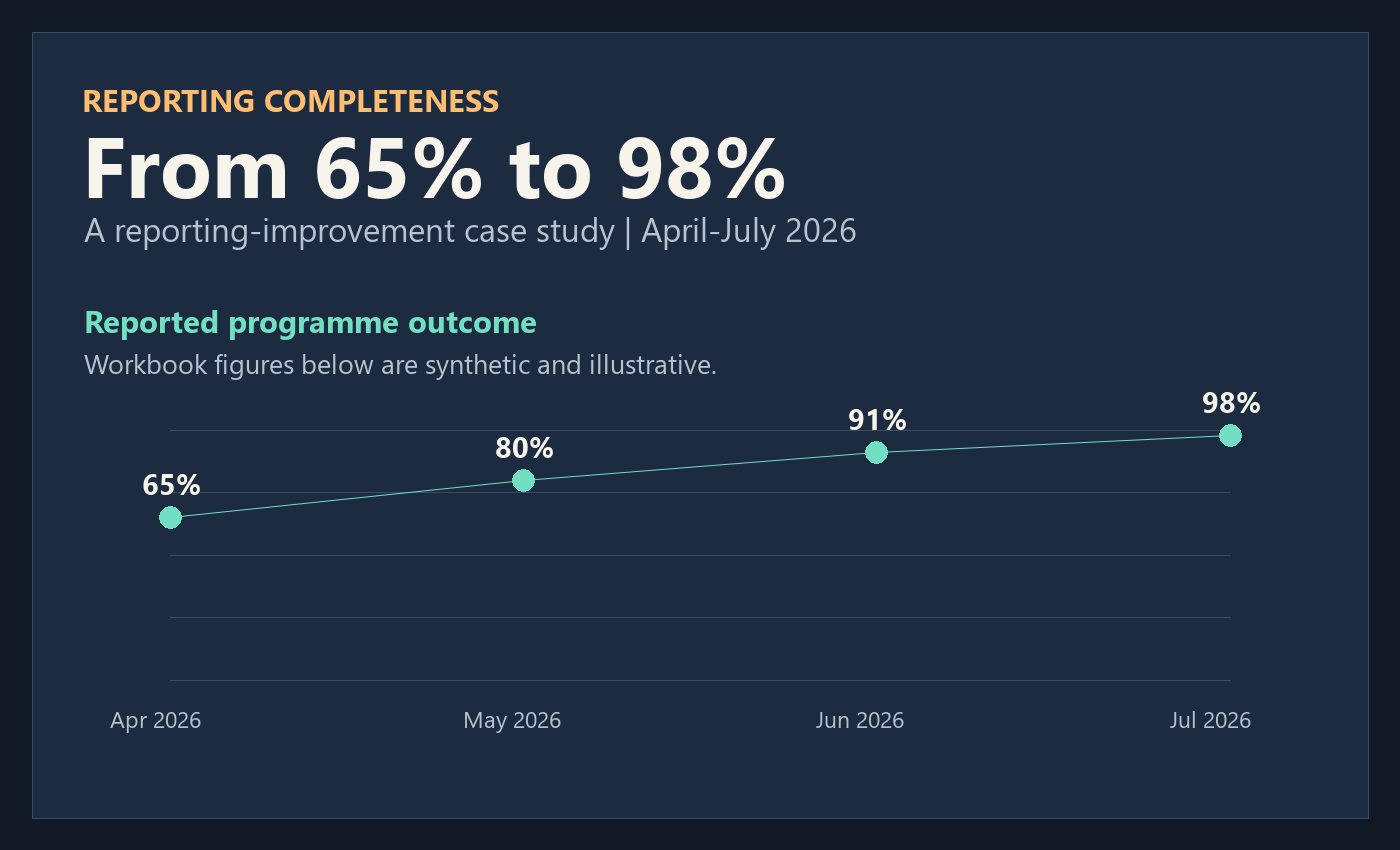
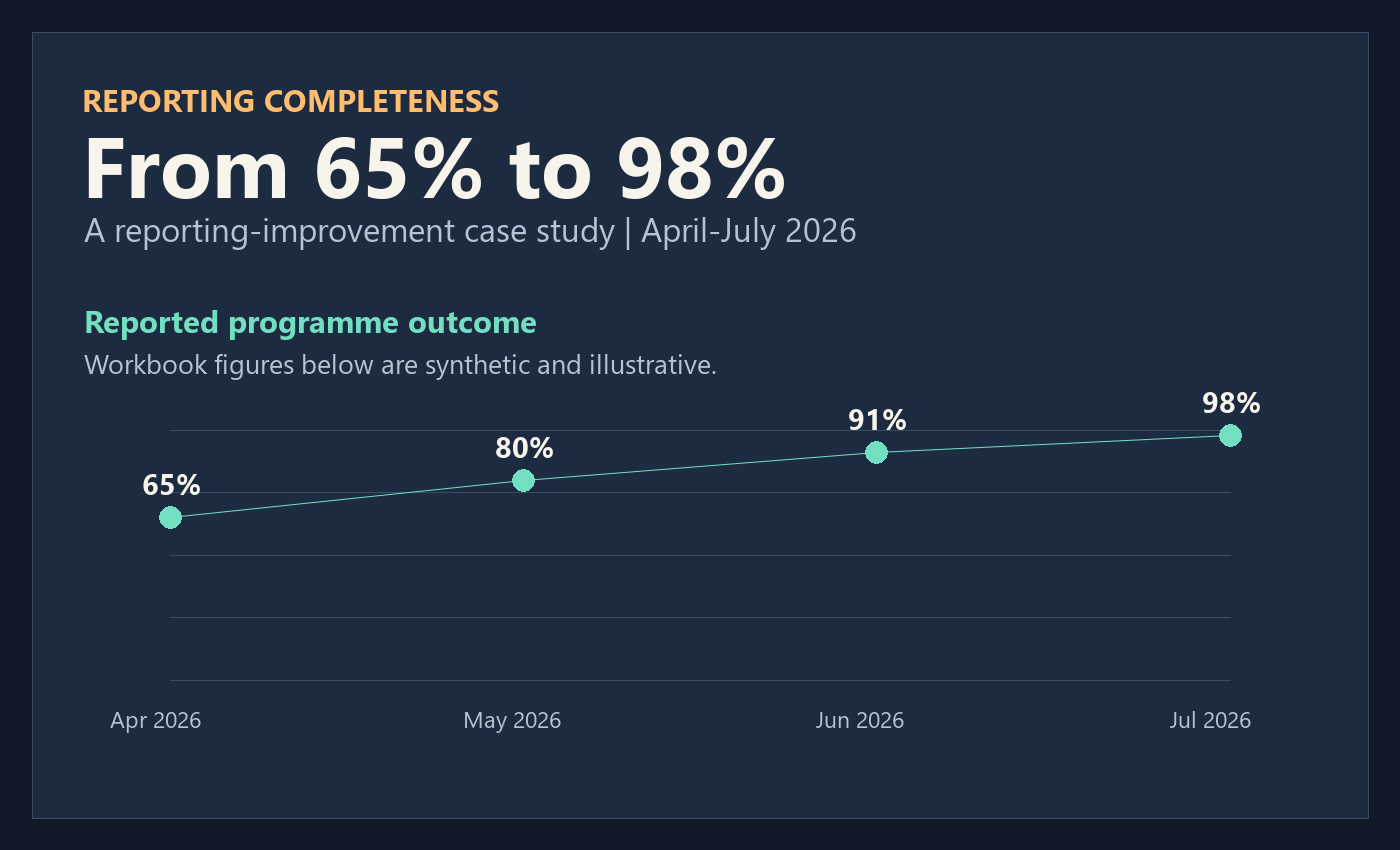
This case study documents a reported improvement in routine reporting completeness from approximately 65% to 98% over about three months. It focuses on practical support to strengthen reporting routines, identify missing submissions earlier, and give facility teams clear follow-up actions.
Data note: The report describes an outcome from professional experience. The accompanying workbook is a synthetic demonstration created to show the calculations and reporting methods. Its facility codes, report counts, and month-by-month records are fictional and are not the original programme dataset.
The challenge
Missing or late routine reports limited the availability of complete programme information and made it harder to identify reporting gaps early. The improvement effort focused on finding the causes of non-submission and making follow-up more consistent.
Approach and actions
- Mentored facility data staff to update registers routinely rather than allowing month-end backlogs to build.
- Strengthened reconciliation of database entries against facility registers before report submission.
- Encouraged early reporting of laptop faults and tracked reported issues through repair.
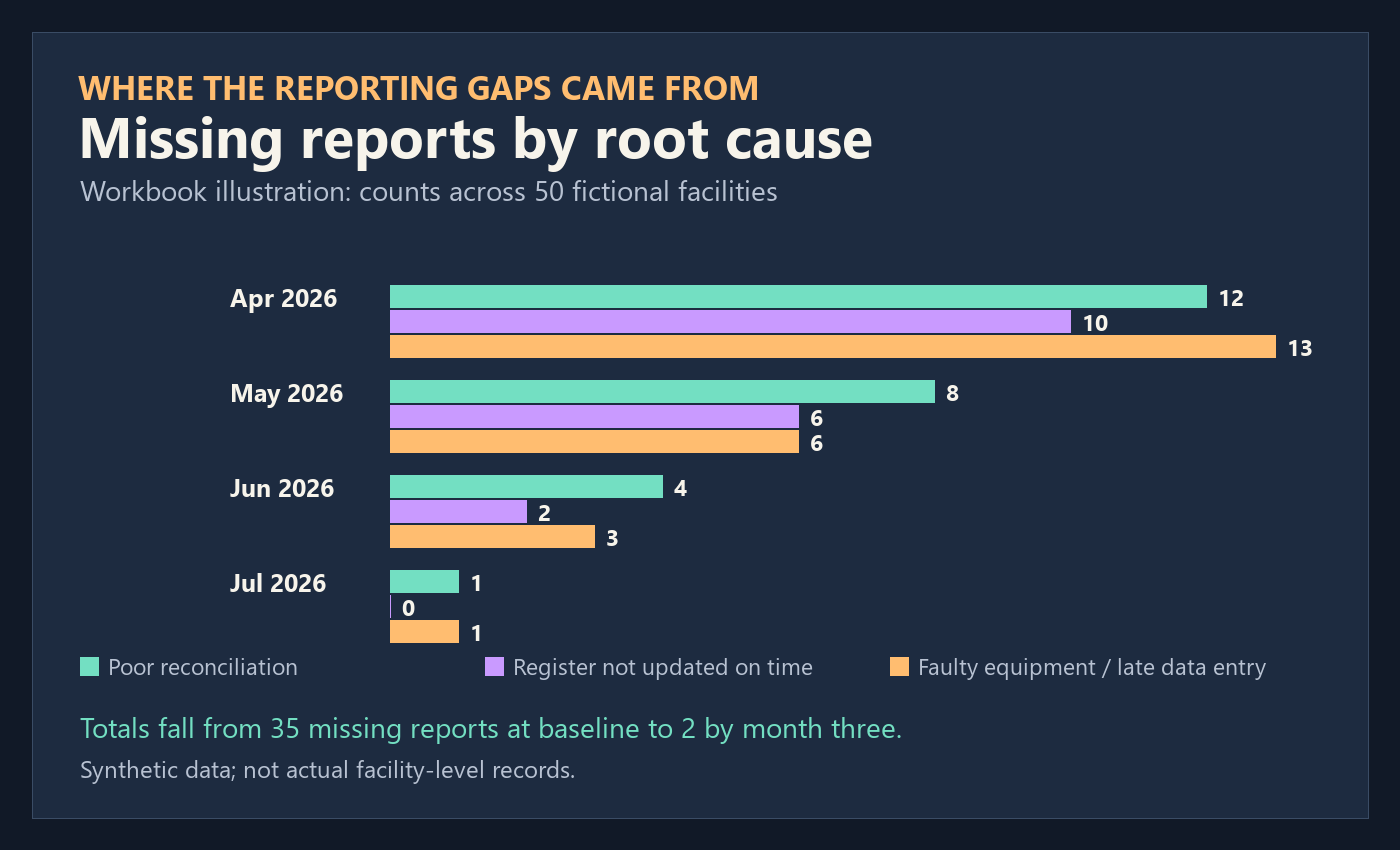
- Followed up missing reports with facility focal persons and recorded the reasons for non-submission.
Measurement and illustrative workbook
Reporting completeness is calculated as reports received divided by reports expected, multiplied by 100. The workbook demonstrates the measure over an April to July 2026 period with 50 fictional facilities and two expected report types per facility each month. It includes a summary, missing-report causes, facility gap counts, and an intervention log.
Outcome
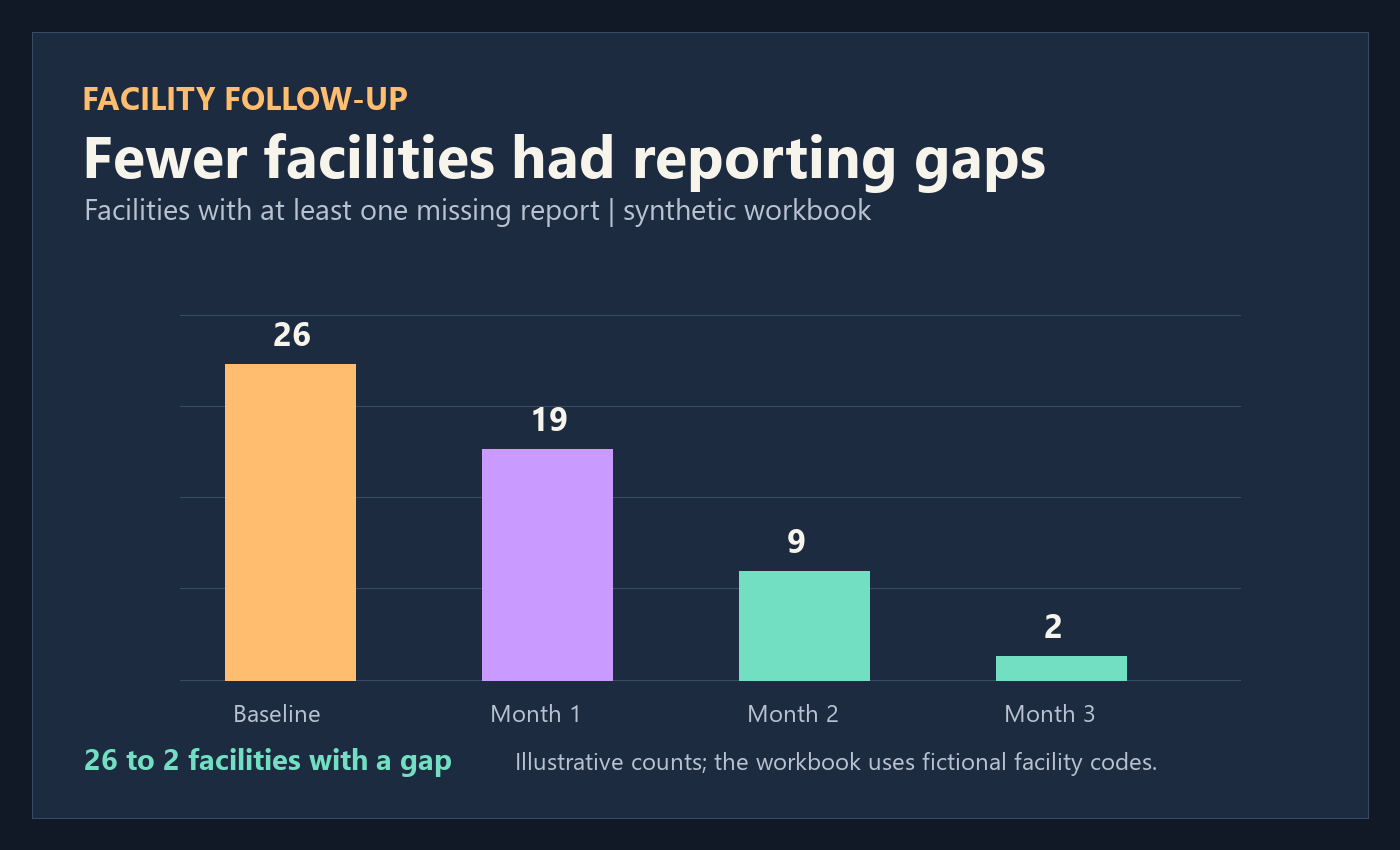
The report describes completeness increasing from approximately 65% to 98% over about three months. In the synthetic workbook example, monthly completeness moves from 65% to 80%, 91%, and 98%; missing reports fall from 35 to 2, and facilities with at least one gap fall from 26 to 2. These workbook values illustrate the method and must not be read as actual facility-level results.
Lessons
- Routine updates help prevent reporting backlogs.
- Pre-submission reconciliation helps teams identify incomplete updates before reports are sent.
- Timely equipment support can remove a practical barrier to data entry.
- Recording why reports are missing helps target follow-up to the underlying issue.
Scope: This project reports a completeness outcome. It does not claim that timeliness or data accuracy improved, and the synthetic workbook does not independently verify or establish the cause of the reported change.